
What’s Page Object Model (POM)? The goal of the Page Object Model design pattern is to decrease the amount of work required for code maintenance and to lessen code duplication. All web pages that underwent end-to-end UI automated testing have page classes built for them under the Page Object Model. An object-oriented class that acts […]
Platforms and Technology

Part 1: Setting Up Page Object Model for Selenium Automation with PyDev in Eclipse
Introduction to Selenium Web application testing is the primary use of Selenium, an open-source program that may be used for various tasks, such as web scraping and automating tedious tasks. Apart from supporting multiple programming languages, including Python, Java, C#, and others, it provides a suite of tools for automating web browsers across various platforms. […]

Acceptance Criteria – Part 2 of User Story
This blog is the second post in a series about leveraging user stories to improve product outcomes. In this post, we will explore how acceptance criteria can be used to define the scope and requirements of user stories. What are Acceptance Criteria? Acceptance criteria, or AC, are the minimum level of expectations that need to […]

Level Up Your Map with the ArcGIS SDK
In today’s tech-driven world, the ability to visualize data spatially has been vital for various industries. Enter ArcGIS, a Geographic Information System (GIS) developed by ESRI, which is here to help us solve our client’s needs. Let’s chart our way into the world of ArcGIS and how it empowers businesses to harness the full capabilities […]

Connecting SFCC with Other Clouds
Are you looking to revolutionize your e-commerce strategy? Look no further than Salesforce Commerce Cloud (SFCC) and its powerful integrations with other Salesforce clouds. SFCC’s ability to seamlessly connect with Marketing Cloud, Service Cloud, and Sales Cloud opens up a world of possibilities for businesses seeking to enhance their customer engagement, drive sales, and optimize […]

Salesforce Data Cloud – What Does noETL / noELT Mean for Me?
In the realm of data management and analytics, the terms ETL (Extract, Transform, Load) and ELT (Extract, Load, Transform) have been commonplace for decades. They describe the processes involved in moving data from one system to another, transforming it as needed along the way. However, with the advent of technologies like Salesforce Data Cloud, a […]

AI Automation Testing: A Deep Dive into Katalon Studio’s StudioAssist Feature
Katalon Studio is a robust test automation tool that offers a range of features to streamline the testing process. One such feature is StudioAssist, which provides intelligent suggestions and code completion to help testers write tests more efficiently. This blog will explore how StudioAssist can enhance your test automation efforts and provide practical tips for […]

React Native – A Web Developer’s Perspective on Pivoting to Mobile
Making the Switch I’ve been working with React Web for the last 6 years of my dev career. I’m most familiar and comfortable in this space and enjoy working with React. However, I was presented with an opportunity to move into mobile development towards the end of 2023. Having zero professional mobile development experience on […]
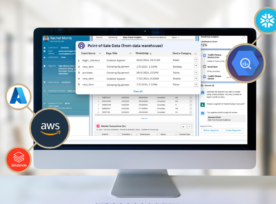
ELT IS DEAD. LONG LIVE ZERO COPY.
Imagine a world where we can skip Extract and Load, just do our data Transformations connecting directly to sources no matter what data platform you use? Salesforce has taken significant steps over the last 2 years with Data Cloud to streamline how you get data in and out of their platform and we’re excited to […]

Charting Your Course to Success: A Guide to Crafting Powerful OKRs for Product Development
Last week, we introduced the concept of Objectives and Key Results (OKRs) – a goal-setting framework for aligning your teams, fostering innovation, and driving measurable outcomes – and demonstrated the differences between OKRs and KPIs . If you haven’t explored that post yet, you can find it here. Now, let’s dive into how OKRs can […]

Guide to TestCloud Tunnels Configuration for Test Execution in Private Domain
Testing applications hosted locally or in private environments presents a unique challenge for testers. Accessing these applications for testing purposes requires setting up a secure connection, commonly known as a tunnel. This detailed guide will explore the concept of test cloud tunnels and provide a step-by-step configuration process to enable test execution in a private […]

Overcoming Payer Challenges With Perficient’s Shop, Quote & Enroll Solution
In today’s rapidly evolving healthcare landscape, payers face numerous challenges in delivering efficient and personalized services to their members. The traditional healthcare experience is often fraught with complexities, inefficiencies, and a lack of transparency, leaving both payers and members frustrated. The Challenges: Lack of a Single Member View: Payers often struggle with fragmented member data […]