
Part 370 is broken into 10 parts, as follows. 370.1 Purpose and scope The purpose of Part 370 is to improve the FDIC’s ability to fulfill its two mandates related to paying deposit insurance: Pay deposit insurance as soon as possible after the failure of a covered bank; and Resolve a covered institution with the […]
Financial Services

Using Data & Tech For Regulatory And Compliance Initiatives [With Examples]
The data that SoFi leverages enables the company to be quick and efficient – two things that people value in companies. However, the data and technology that make SoFi successful also addresses some of the regulatory concerns by essentially forcing it to be blind to applications. Data is helping financial institutions with tasks like identifying […]

FDIC Part 370: The Background
The financial crisis of 2008 brought several institutional collapses that were unanticipated in both scale and speed. While existing processes were deemed suitable to handle smaller or slower bank failures, the FDIC realized that it might struggle to pay depositors if a complicated bank failed rapidly. The FDIC is required by law to pay depositors […]

Data Is Driving Innovation In Financial Services [With 2 Examples]
Data is king for many reasons, and the amount of data we produce every day grows exponentially. According to some estimates, 90% of the data in existence today was created within the last two years. IBM estimates that we create 2.5 quintillion bytes of data every day, or enough to fill 10 million Blu-Ray discs. […]
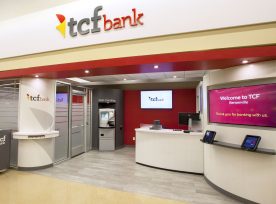
Transforming TCF Bank With Microservices And APIs
We’ve done many of API and microservices projects over the years, but I thought it would be nice to share what we presented at the recent CA World conference, which took place at the end of 2017. We shared the stage with TCF Bank, a client of ours. According to the company’s website, TCF Bank […]

How Many Novel Drugs Were Approved In 2017?
When it comes to drug approvals, 2017 was a great year for the pharmaceutical industry. According to Reuters, the number of drugs approved in the United States was the highest number in 21 years. In fact, the 46 novel drugs that were approved was more than double what was approved in 2016. This figure doesn’t […]

[Guide] A Comprehensive Guide To FDIC Part 370
The Recordkeeping for Timely Deposit Insurance Determination rule, more commonly referred to as 12 CFR Part 370, or simply Part 370, became effective April 1, 2017. The rule details new recordkeeping and reporting requirements for the largest depository institutions that help ensure prompt payments to consumers in the event of institutional failures. Part 370 generally […]

Financial Services Trends In 2018 [Guide]
Predicting the future of finance is, for the most part, impossible. However, if you look back (and not that far) at the history of innovation in our industry, chances are you believe the future is bright. Consider how far we’ve advanced in just the past 60 years: Modern-day credit cards were introduced in 1950, starting […]

How Blockchain Can Disrupt Financial Services
This table below highlights how blockchain can disrupt various aspects of the financial services industry. If you are interested in learning more about blockchain, download our new guide titled “Getting Ahead with Blockchain in Financial Services.”

6 Investigators Received FDA Warning Letters In 2017
It’s been awhile since I’ve written about FDA warning letters, so I thought I would take a look at the letters issued throughout the year and see if anything egregious (or at least interesting) came up. I was surprised to learn that the FDA issued letters to six separate clinical investigators, and I thought the […]

Understanding Public and Private Blockchains
Leveraging blockchain technology requires access to a blockchain platform. Public or permissionless blockchain platforms, however, have limitations for financial enterprise transactions, creating privacy concerns by enabling everybody on the blockchain to have visibility of all transactions. Additionally, the sheer vastness of potential transactions requires a substantial amount of computational power, which can slow transaction processing […]

The Blockchain Process
Current transaction processing requires trusted intermediaries to store assets, verify the legitimacy and solvency of each party in a transaction, validate each asset being transacted, complete the transfer of ownership of the asset, and record the transaction in a centralized ledger. Once a transaction is initiated, the initiating party has no visibility of each stage […]