
Introduction
When I started investigating the React Native upgrade from 0.72.7 to 0.82, my initial goal was simple:
Check breaking changes and library compatibility. But very quickly, I realized this upgrade was not just a version bump. It was deeply tied to React Native’s New Architecture, especially Fabric UI Engine and TurboModules. This blog shares what I discovered, what changed internally, and why this upgrade matters in real-world apps, not just release notes.
Why I Started Digging Deeper
At first glance:
- The app was already stable
- Performance was “acceptable”
- Most screens worked fine
Why should we even care about Fabric and TurboModules while upgrading?
The answer became clear when I compared how React Native worked internally in 0.72.7 vs 0.82.
The Reality in React Native 0.72.7 (Old Architecture)
In 0.72.7, even though the New Architecture existed, most apps were still effectively running on the old bridge model.
What I Observed
- UI updates were asynchronous
- JS → Native communication relied on serialized messages
- Native modules were eagerly loaded
- Startup time increased as the app grew
Performance issues appeared under:
- Heavy animations
- Large FlatLists
- Complex navigation stacks
None of these were “bugs” they were architectural limitations.
What Changed in React Native 0.82
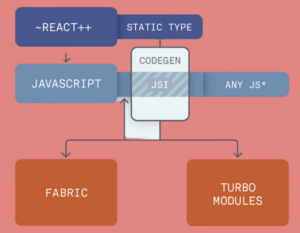
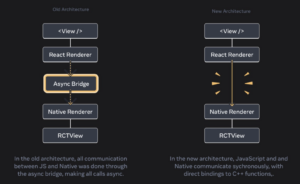
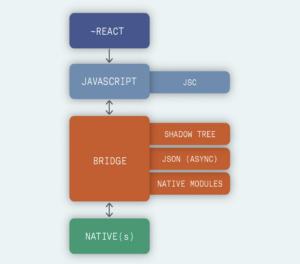
By the time I reached 0.82, it was clear that Fabric and TurboModules were no longer optional concepts they were becoming the default future. The upgrade forced me to understand why React Native was redesigned internally.
My Understanding of Fabric UI Engine (After Investigation)
Fabric is not just a rendering upgrade it fundamentally changes how UI updates happen.
What Changed Compared to 0.72.7
Synchronous UI Updates
Earlier:
- UI updates waited for the JS bridge

With Fabric:
- UI updates can happen synchronously
- JS and Native talk directly through JSI
- Result: noticeably smoother interactions
This became obvious in:
- Gesture-heavy screens
- Navigation transitions
- Scroll performance
Shared C++ Core
While upgrading, I noticed Fabric uses a shared C++ layer between:
- JavaScript
- iOS
- Android
This reduces:
- Data duplication
- Platform inconsistencies
- Edge-case UI bugs
From a maintenance point of view, this is huge.
Better Support for Concurrent Rendering
Fabric is built with modern React features in mind.
That means:
- Rendering can be interrupted
- High-priority UI updates are not blocked
- Heavy JS work doesn’t freeze the UI
In practical terms:
The app feels more responsive, even when doing more. TurboModules: The Bigger Surprise for Me, I initially thought TurboModules were just an optimization. After digging into the upgrade docs and native code, I realized they solve multiple real pain points I had faced earlier.
What I Faced in 0.72.7
- All native modules are loaded at startup
- App launch time increased as features grew
- Debugging JS ↔ Native mismatches was painful
- Weak type safety caused runtime crashes
What TurboModules Changed:
Lazy Loading by Default
With TurboModules:
- Native modules load only when accessed
- Startup time improves automatically
- Memory usage drops
This alone makes a big difference in large apps.
Direct JS ↔ Native Calls (No Bridge)
TurboModules use JSI instead of the old bridge.
That means:
- No JSON serialization
- No async message queue
- Direct function calls
From a performance perspective, this is a game-changer.
Stronger Type Safety
Using codegen, the interface between JS and Native becomes:
- Explicit
- Predictable
- Compile-time safe
Fabric + TurboModules Together (The Real Upgrade)
What I realized during this migration is:
Fabric and TurboModules don’t shine individually they shine together.
| Area | React Native 0.72.7 | React Native 0.82 |
| UI Rendering | Async bridge | Synchronous (Fabric) |
| Native Calls | Serialized | Direct (JSI) |
| Startup Time | Slower | Faster |
| Animations | Jank under load | Smooth |
| Native Integration | Fragile | Strong & typed |
| Scalability | Limited | Production-ready |
My Final Take After the Upgrade Investigation
Upgrading from 0.72.7 to 0.82 made one thing very clear to me:
This is not about chasing versions. This is about adopting a new foundation.
Fabric and TurboModules:
- Remove long-standing architectural bottlenecks
- Make React Native feel closer to truly native apps
- Prepare apps for future React features
- Reduce hidden performance debt
If someone asks me now:
“Is the New Architecture worth it?”
My answer is simple:
If you care about performance, scalability, and long-term maintenance yes, absolutely.