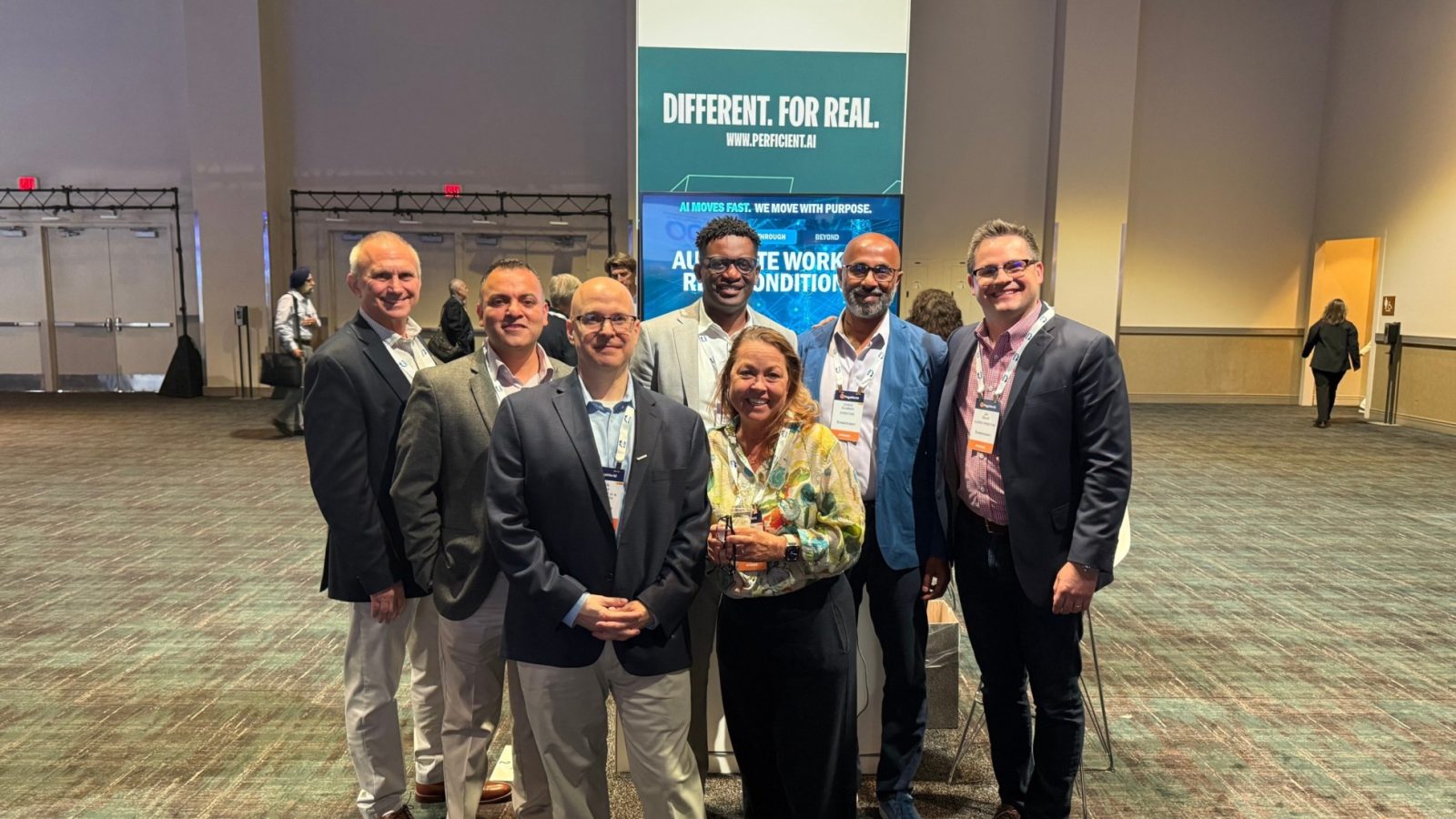
PegaWorld 2026 surfaced a clear message from enterprise leaders responsible for digital and AI investment decisions: AI progress is directly linked to workflow readiness.
Our team guided important discussions about modernization drag, governance pressure, cost control, and uncertainty about how emerging AI capabilities should fit into real business workflows.
Across those conversations, the same issue kept showing up:
Many organizations are moving faster on AI planning than they are on the architecture, operating model, and controls required to support execution at scale.
That matters because the current phase of enterprise AI is operational. Leaders are being asked to improve speed, lower costs, strengthen customer and employee experiences, and show measurable returns.
Why does workflow readiness matter for AI strategy?
Workflow readiness matters because brittle process architecture, delayed modernization, and weak governance make it harder to move AI from planning into controlled execution across service, operations, customer engagement, and decisioning. That is why workflow readiness deserves more attention in digital investment planning. The organizations best positioned to do that are the ones that can place the right capabilities into the right workflows and govern how those workflows perform over time.
Why Modernization Kept Coming Up
Across conversations, it was abundantly clear that operational realities shape how quickly organizations can act on new priorities:
- Legacy platform estates
- Upgrade complexity
- Cloud migration delays
- Stalled executive buy-in as practical barriers to progress
Leaders are now evaluating whether their platforms and processes can carry intelligence into execution across the enterprise and beyond.
“Enterprises that address workflow architecture early have a clearer path to value. Enterprises that delay it keep absorbing friction into every new initiative.”
Governance Must Be Part of the Business Case
Compliance. Risk. Explainability. Observability. Reliability. Difficulty of estimating AI-related costs. These issues shape how leaders evaluate confidence, control, and future investment decisions.
This aligns with Perficient’s broader perspective on governing AI at scale. Governance defines where AI belongs, what it is allowed to do, how outputs are validated, and how performance is measured over time.
As organizations move toward more agentic patterns, that structure becomes even more important. Autonomy requires boundaries, validation steps, and observability if it is going to hold up in production.
Choose AI Based on the Work
PegaWorld conversations also revealed a practical challenge that deserves more direct attention: fit-for-use clarity. Confusion between agentic AI, orchestration, deterministic automation, and more traditional forms of AI has real consequences.
When organizations apply the wrong level of intelligence to the wrong type of work, they increase cost, complexity, and delivery risk.
How should enterprise leaders choose between different AI approaches?
Start with the nature of the work.
- Deterministic automation supports repeatable steps.
- Predictive AI supports scoring and forecasting.
- Generative AI supports summarization and drafting.
- Agentic patterns are better suited for governed coordination across systems and roles.
Intelligent process orchestration connects those choices.
It helps leaders determine where rules belong, where models belong, where generative tools can accelerate work, and where agentic capabilities can operate within clear boundaries. That discipline improves how work moves through the business and gives leaders a stronger basis for sequencing investments.
What PegaWorld 2026 Revealed About AI Investment Priorities
PegaWorld 2026 reinforced that enterprise leaders are prioritizing workflow readiness, modernization, governance, and fit-for-use AI decisions because those factors determine whether AI can perform reliably inside real business processes.
- CIOs and platform leaders: The priority is architecture that can support governed execution. That includes upgradeability, cloud readiness, integration flexibility, and observability across workflow performance.
- Operations leaders: The focus should be high-volume workflows where orchestration can reduce delays, improve consistency, and lower manual effort.
- Customer and marketing leaders: The question is whether decisioning and execution can happen in real time across the moments that shape loyalty, conversion, and service outcomes—including moments you don’t necessarily control.
- Transformation leaders: The issue is readiness for a blended human-and-agent operating model, including adoption, role clarity, and trust.
Industry nuance still matters. Regulated industries like financial services and healthcare share heavier burdens around explainability, trust, and compliance. Even so, the broader pattern held across industries: Workflow readiness, governance, cost discipline, and practical fit-for-use decisions are emerging as common enterprise priorities.
The Real Takeaway
PegaWorld 2026 highlighted a more demanding phase of enterprise AI. Leaders are being asked to move faster while making choices that will hold up under scale, complexity, affordability and accountability. The organizations that advance most effectively will be the ones that modernize the workflow layer, govern AI where it acts, and apply fit-for-use thinking to every investment decision. That is how digital and AI priorities become measurable business outcomes rather than a growing backlog of disconnected initiatives.
Discover how Perficient equips leaders to choose and act with clarity—connecting strategy, data, workflows, and AI into systems designed for real, measurable execution.