For years, BI platforms have run on the same logic: someone formulates a query, the system returns a result, and an analyst interprets what it means. That model works fine when questions are simple, and the data lives in one place.
But enterprise questions are rarely simple, and the data almost never lives in one place.
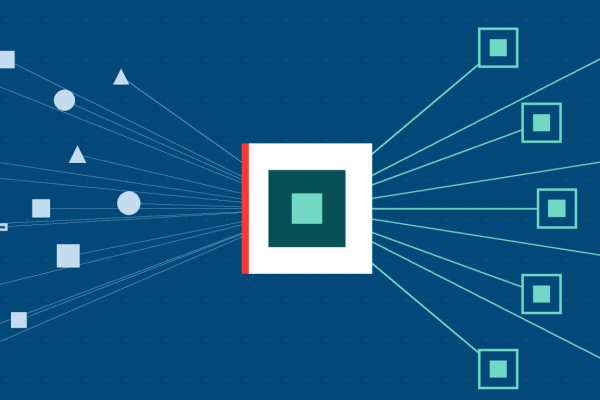
At Summit 2026, Snowflake introduced Snowflake Intelligence, the orchestration and reasoning layer at the heart of its new Agentic Enterprise architecture. Unlike traditional BI tools that respond to queries, Snowflake Intelligence enables autonomous reasoning across an organization’s entire data estate, planning multi-step tasks, delegating subtasks to specialized agents, and coordinating workflows that span structured data, unstructured documents, and real-time streams, all within Snowflake’s governance perimeter.
For leaders, that shift changes what needs to sit at the center of the enterprise stack. Snowflake describes Snowflake Intelligence as the brain connecting enterprise data, AI models, applications, and reasoning workflows into a single system, the piece leadership teams will need to understand as they plan their own agentic architecture.
What Is Snowflake Intelligence?
Snowflake Intelligence operates within what Snowflake calls the Agentic Control Plane, the central component that connects AI models, enterprise data, and software applications into a unified execution model. Rather than functioning as one more tool in the analytics stack, it acts as the layer that coordinates how those three pieces work together.
Technical Architecture
Snowflake Intelligence sits at the intersection of four architectural layers:
- Enterprise Data and Context: the governed data foundation, including tables, stages, streams, and semantic metadata from Horizon Context.
- AI Models: foundation models (including Anthropic Claude, Meta Llama, and Mistral) accessible through Cortex AI, plus custom fine-tuned models.
- Agentic Control Plane: where Intelligence lives, orchestrating reasoning, planning, tool use, and agent coordination.
- Software and Applications: end-user surfaces including Snowsight, CoWork, partner applications, and custom Snowflake Apps.
Key Technical Capabilities
Six capabilities define what Snowflake Intelligence does differently at an operational level:
- Multi-step reasoning: decomposes complex questions into sub-tasks, executes them in sequence or parallel, and synthesizes results.
- Agentic Search: searches across thousands of data assets, documents, and semantic views to find relevant context for answering enterprise questions.
- Tool orchestration: invokes SQL queries, Python functions, Cortex AI models, and external APIs as tools within a reasoning chain.
- Context-aware governance: every reasoning step natively respects RBAC, data masking, row-level security, and audit logging.
- Feedback loops: an Observe → Decide → Act → Learn cycle that improves agent performance over time.
- Knowledge worker empowerment: designed so business users can interact via natural language, not just developers.
How It Differs from Traditional Analytics
Traditional BI requires humans to formulate precise queries, join datasets manually, and interpret results. Snowflake Intelligence inverts that model: a user expresses intent in natural language, for example, “Which accounts are at highest churn risk and what drove the change?” and the system autonomously identifies relevant data sources, executes the necessary analysis, and returns a synthesized answer with provenance.
| Dimension | Traditional BI | Snowflake Intelligence |
| How it starts | User formulates a precise query | User expresses intent in natural language |
| Who joins the data | The analyst, manually | The system, autonomously |
| Scope of the answer | A single result to a single query | A synthesized, multi-step analysis |
| Governance | Varies by tool | Natively inherits RBAC, masking, and audit logging |
| Data copies | Often requires separate environments | Operates on the same governed data |
Snowflake sums up this principle as “same context, same governance, different superpowers”: Intelligence operates on the same governed data that an organization’s analysts and dashboards already use. There is no separate data copy, no shadow analytics environment, and no governance gap.
Use Cases
From a leadership perspective, these are the scenarios where that shift shows up first:
- Executive decision support: leadership asks complex, cross-domain questions and gets sourced, multi-step answers in seconds.
- Cross-functional analytics: finance, operations, and customer success data joined and reasoned over without manual ETL.
- Investigation and root cause: autonomous exploration of anomalies across metrics, logs, and business data.
- Report generation: automatic creation of quarterly business reviews, compliance reports, and investor summaries from live data.
Architectural Considerations for Adoption
When assessing readiness, Intelligence is most effective when an organization’s data estate is semantically rich. That means:
- Semantic Views: define business-level meaning on top of raw tables, so Intelligence understands context.
- Horizon Context: enrich metadata with descriptions, tags, lineage, and popularity signals.
- Data quality: agents cannot distinguish good data from bad; quality must be established upstream.
- Access controls: RBAC and masking policies must be complete and up to date, since Intelligence inherits them.
Getting Ready for the Agentic Enterprise
The success of any agentic architecture hinges on data readiness. Autonomous reasoning is only as effective as the enterprise data estate supporting it.
For enterprise leaders, that puts data governance and semantic readiness on the same strategic agenda as the AI models and applications built on top of them.
If you’re exploring how Snowflake Intelligence fits into your data strategy, reach out to Perficient’s Snowflake experts.