Forrester Report Shows Where AI Agents Are Delivering Results in CRM
AI agents are moving past the demo stage. Revenue leaders now face a harder test: proving these tools can improve pipeline, accelerate sales, and help teams serve customers at scale.
Marketing teams need to turn engagement signals into growth. Sellers need more time for customer conversations. Service teams need to scale without weakening the customer experience. Another tool in an already crowded technology stack won’t solve these challenges.
Results depend on how agents fit into the way teams make decisions and get work done. Agents deliver value when they are embedded in workflows where people make decisions and take action. That requires more than connecting an agent to CRM. It requires trusted data, clear processes, human oversight, defined performance measures, and a plan for adoption after deployment.
Forrester Examines Where AI Agents Deliver Results in CRM
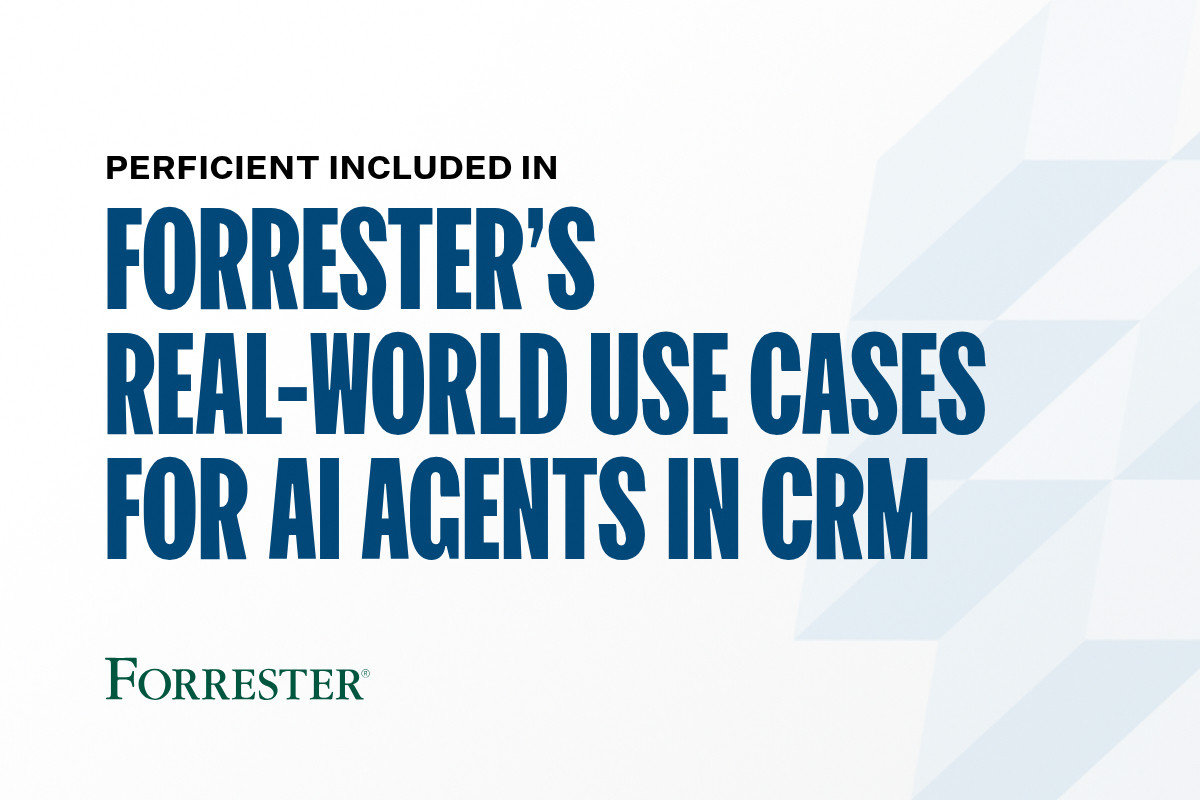
Perficient was included in Forrester’s Real-World Use Cases for AI Agents in CRM report, which outlines common applications for AI agents across marketing, sales, and customer service.
The report focuses on how organizations are using AI agents in CRM today.
For leaders deciding where to invest, useful questions to consider include where agents work today, what conditions make them effective, and how organizations can turn early gains into sustained business performance.
An SDR Agent Moves Qualified Leads Forward Faster
A Perficient client example cited by Forrester shows how an AI agent can improve the path from lead to revenue.
Our team worked with a technology provider serving businesses in specialized vertical markets to improve lead qualification and account research. A production-ready sales development representative agent helped their team prioritize the right leads, streamline research, and act on opportunities sooner.
Within four weeks, the agent generated more pipeline and reduced lead-to-revenue time by 83%, from 56 days to nine days.
The results came from improving the full lead process, from research and qualification through prioritization and follow-up. The agent gave the team the context needed to focus on qualified opportunities and move them forward sooner. Organizations should evaluate agentic AI investments the same way: start with the decision, workflow, or customer moment that needs to improve, then determine where an agent can make a meaningful difference.
What Happens After an AI Agent Goes Live
A strong use case can still stall without adoption and ongoing refinement.
Launching an agent does not guarantee that teams will trust it, use it, or change how they work. Organizations need to monitor outputs, measure performance, gather feedback, refine agent behavior, and maintain clear guardrails. Human review remains essential, particularly when agents influence customer-facing decisions.
Chelsea Monda, director of agentic transformation at Perficient, explained in an interview for the Forrester report why the work continues after launch:
“We stay engaged with our clients over many weeks post-rollout to drive usage and make sure we are realizing the value promised.”
That continued engagement helps teams build confidence in the agent, identify where adjustments are needed, and keep the technology aligned with business goals. It also creates a path for successful agents to expand into more connected workflows.
This is where many AI programs lose momentum. Organizations treat launch as the finish line, then move to the next pilot. The result is a collection of isolated tools rather than a connected revenue system.
Building an Agentic Front Office
Our Agentic Front Office approach connects intelligence across CRM, collaboration platforms, business workflows, and customer-facing teams. It starts with processes, not platforms.
We help organizations identify high-value workflows, prepare the right data and context, establish governance, define KPIs, and embed human oversight. We also support the adoption and optimization required after agents go live.
We believe Perficient’s inclusion in the Forrester report reflects our sustained focus on making agentic AI work in real operating environments. We have tested the model internally as Customer Zero and applied those lessons with clients facing real data, process, and adoption challenges.
Progress in CRM AI will be reflected in better decisions, faster action, stronger customer relationships, and sustained business results.
Explore Perficient’s Agentic Front Office approach to learn how connected intelligence, human judgment, and continuous optimization can turn AI agents into measurable front-office outcomes.